Countryside Meadow Seed
Our Countryside Meadow Seeds whip up a delicious buffet for pollinating insects! Bees, butterflies, and their winged pals. While providing snug hideouts for small mammals. It’s a guaranteed way to keep your local ecosystem feeling pollen-tastically happy!
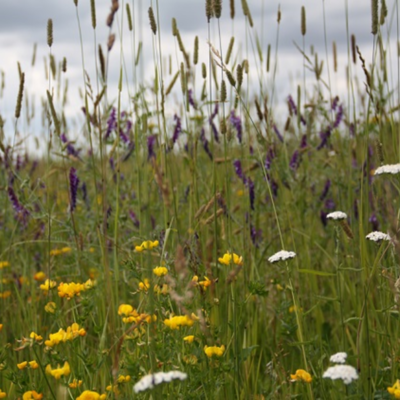
- An abundance of pollen and nectar-rich flowers
- Maintain natural balance in your garden or farmland
This mix produces an abundance of pollen and nectar-rich flowers that provide a vital food source for bees, butterflies, and other pollinators. It also supports a healthy ecosystem by attracting beneficial insects that help maintain natural balance in your garden or farmland.
Contains:
- 40% Strong Creeping Red Fescue
- 25% Chewings Fescue
- 15% Hard Fescue
- 5% Smooth Stalk Meadow Grass
- 3.75% Sa...
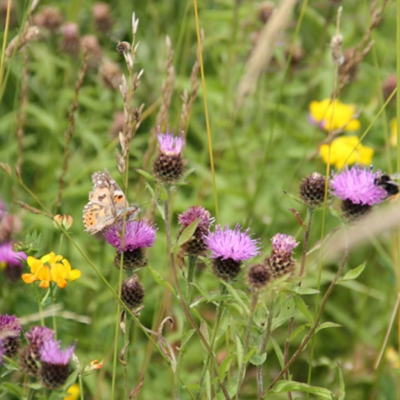
- Nectar-rich habitat for insects, birds and small mammals
- Contains 19 species
Provide a nectar-rich habitat for butterflies, insects, birds, and small mammals. This vibrant mix supports a wide range of wildlife, encouraging biodiversity and helping your landscape thrive naturally.
Contains:
- 30% Strong Creeping Red Fescue
- 10.75% Chewing's Fescue
- 10% Hard Fescue
- 10% Timothy
- 10% Slender Creeping Red Fescue
- 6% Smooth Stalk Meadow Grass
- 4.5% Red Clover
- 4.5% Sainfoin
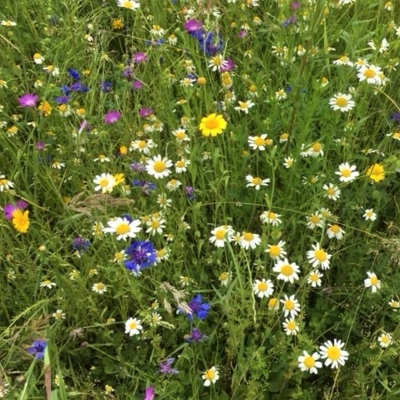
- Combination of wildflower seeds, farmland crops and 'super-pollinators'
- Economical mix for maximum benefit to pollinators over large areas
A combination of native wildflower species, farmland crops and 'super' pollinators to create a colourful habitat for birds, pollinators and small mammals. This wildflower meadow mix provides long-lasting, full summer colour with a bountiful source of pollen and nectar for bees and butterflies and other pollinators. Provides winter food and shelter for birds and small mammals. This is a very econo...
Looking for something else?
Discover our full range of wildflower seeds, from individual UK-native wildflower seed species to carefully balanced wildflower mixtures designed for meadows, gardens, and specific soils.
Countryside Meadow Seed FAQs
What Is Countryside Meadow Seed?
Countryside meadow seed is a specific type of wildflower seed mixture designed to recreate traditional British rural meadows rather than ornamental garden displays.
When people ask what is countryside meadow seed, the answer lies in its balance. A countryside meadow seed mix typically combines meadow grasses with compatible native wildflowers. The grasses provide structure and durability, while the flowering species introduce seasonal colour and biodiversity value.
This differs from high-colour garden blends or urban mixes that prioritise short-term visual impact. Countryside meadow seeds are suited to paddocks, field margins, rural gardens, and wider natural landscapes where authenticity and long-term stability matter.
The intention is to establish a meadow that reflects traditional English countryside character, not a decorative planting scheme. That distinction shapes both its composition and its management.
Why Choose Countryside Meadow Seed for Rural and Natural Landscapes?
A countryside meadow is defined by movement, texture, and seasonal change rather than uniform colour. Through spring and summer, flowering species appear and fade in sequence, while the grass structure remains constant underneath. This creates the familiar variation seen in traditional English field margins and rural landscapes.
Countryside meadow seeds are chosen for long-term establishment rather than quick display. Once rooted, they cope well with lower fertility soils and typical British weather patterns. The aim is steady development rather than rapid cover.
For estates, schools, paddocks, and larger garden projects, a countryside meadow seed mix that’s suitable for UK conditions provides resilience without intensive inputs. It allows land to move away from close mowing and towards a more natural, structured meadow habitat suited to English settings.
What Does a Countryside Meadow Seed Mix Contain?
A countryside meadow grass seed blend combines meadow grasses with compatible native flowering species. The balance between the two is deliberate. Grasses create the long-term framework, while wildflowers introduce seasonal interest and ecological value.
Fine-leaved meadow grasses form the base layer, providing structure, durability, and ground coverage. Alongside them, native flowering species contribute changing colour through spring and summer. This measured composition supports both visual character and habitat function.
The key difference from 100 percent flower-only mixes is stability. Pure wildflower seed mixtures can struggle without a grass base to anchor the sward. By contrast, a traditional countryside meadow seed mix is designed for long-term meadow balance rather than short-lived colour impact.
The result is a natural grass and flower partnership that develops steadily over time rather than competing for dominance.
How to Plant Countryside Meadow Seed Successfully
Understanding how to plant countryside meadow seed begins with proper ground preparation. Existing vegetation must be removed fully, not just cut back. Perennial weeds and strong grasses will quickly outcompete young seedlings if left in place.
Soil should be cultivated to create a fine, level seedbed. The surface needs to be firm rather than loose. Broadcasting evenly by hand or spreader works well across larger areas. Light raking afterwards helps improve seed-to-soil contact, followed by gentle rolling to settle the surface.
Avoid adding fertiliser. Lower fertility soils encourage better meadow balance between grasses and flowers. Even distribution and patience during early growth are more important than high sowing rates.
When to Sow Countryside Meadow Seed in England and the UK
When to sow your seed depends more on soil condition than calendar date. Across England, spring and early autumn are generally the most reliable windows.
Spring sowing works well once soil begins to warm and excess winter moisture has drained. Autumn sowing allows root systems to establish before winter, which can improve resilience the following year. Some native species also benefit from natural winter stratification.
Early growth may appear slow. Germination often occurs within weeks, but visible meadow character takes time. The first season is largely about establishment rather than full flowering.
How to Establish a Countryside Meadow Long Term
Knowing how to establish a countryside meadow properly means managing expectations. The first year often looks uneven and some species develop more quickly than others.
Early management focuses on weed control and light cutting if necessary to prevent dominance. Once established, seasonal mowing or cutting once or twice per year is usually sufficient. Arisings should be removed to keep fertility low.
Over time, species balance improves as grasses and wildflowers settle into a stable rhythm. Countryside meadow seed supports long-term habitat creation rather than instant results. Development is gradual, but it produces a durable and traditional meadow structure suited to British landscapes.
Are Countryside Meadow Seeds Good for Wildlife and Biodiversity?
Mixed grass and flower content provides both structure and seasonal food sources. Grasses create shelter at ground level, while flowering species offer nectar and pollen for insects native to Britain.
A countryside wildflower meadow seed blend supports pollinators, invertebrates, and small mammals through layered habitat. Seasonal flowering ensures varied forage rather than a short burst of colour.
For rural conservation work and stewardship schemes, seed mixes are designed around their contribution to biodiversity without the need for intensive management. It delivers ecological function alongside visual appeal which makes it more suitable for larger natural landscapes and traditional English meadow restoration.
What is countryside meadow seed used for?
It is used to create traditional British meadow landscapes that combine grasses and wildflowers suited to rural English environments.
How long does countryside meadow seed take to establish?
Initial germination usually occurs within weeks, but full meadow development typically takes one to two growing seasons.
When is the best time to sow countryside meadow seed?
Spring and autumn are generally the most reliable sowing periods across England and the wider UK, depending on soil moisture and temperature.
Does countryside meadow seed need regular maintenance?
Once established, maintenance is usually limited to seasonal cutting and basic weed control.
Can countryside meadow seed be used in large fields or paddocks?
Yes. It is particularly well suited to larger rural spaces and traditional English countryside landscapes.
Buy With Confidence

Landlife Wildflowers grow and supply high-quality, native wildflower products, restoring wildflowers right across the UK. Working in conjunction with wildlife charity, Buglife, we’re bringing back Britain’s treasured wildflowers! Find out more about why we’ve been trusted by the general public, Natural England and The National Trust for over twenty years.
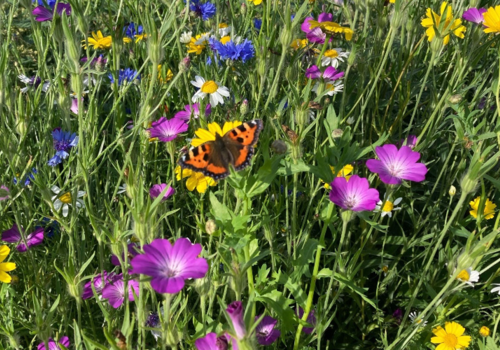
We’re proud to supply only the highest-quality, native wildflower products - tried, tested and refined by us for two decades to ensure each and every customer is delighted with their purchase. Find out more about our commitment to the supply of native, provenance-assured wildflower products to restore Britain’s natural wildflower habitats for bees, butterflies, birds and wildlife.

If you have any questions or would like to get in touch, our team of wildflower experts are on hand to guide you every step of the way. We love talking about wildflowers and the quality of our products, and are pleased to help with any enquiry, including how to establish wildflowers, product recommendations and even creating custom mixtures for specific projects.