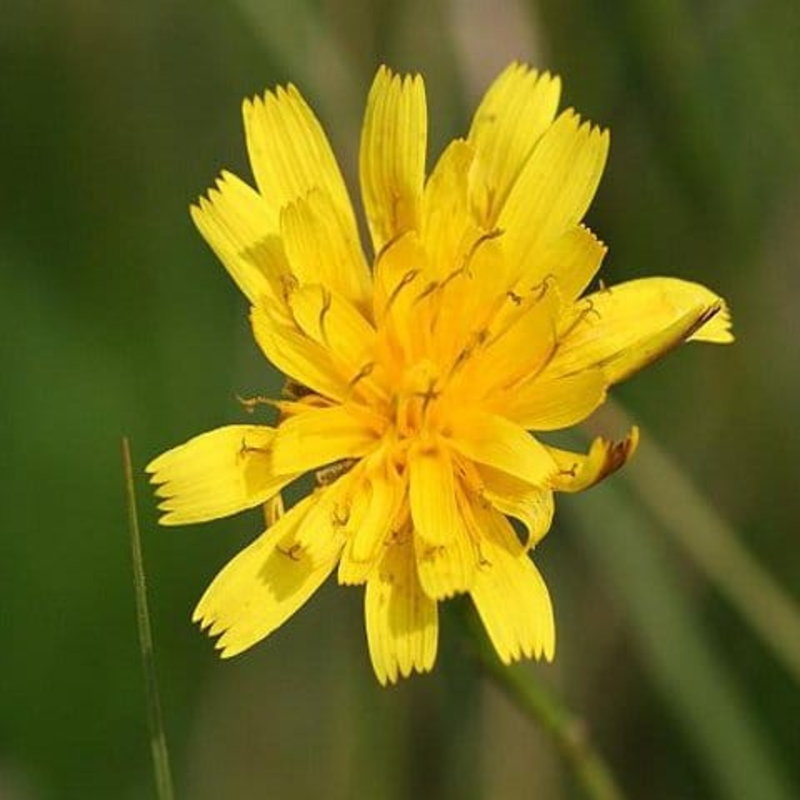
Autumn Hawkbit Plug Plants (Leontodon autumnalis)
A perennial Wildflower plug plant with dandelion-like flowers and seed heads. A good showy meadow subject. The seeds are a magnet for Finches.
- Height: 15 - 50cm
- Flowers: July - September
- Soil Requirement: Moist
- Light Requirement: Full sun and partial shade
What are Autumn Hawkbit plug plants?
Autumn Hawkbit plug plants are young Leontodon autumnalis plants grown in small cells with developed root systems, ready for planting into suitable ground. This native wildflower is known for its bright yellow, dandelion-like flowers and airy seed heads, making it a useful addition to meadow planting, wildlife areas, and naturalistic schemes. Supplied as plugs, the plants establish more quickly and reliably than starting from seed alone.
What is Leontodon autumnalis?
Leontodon autumnalis is the botanical name for Autumn Hawkbit, a native perennial wildflower found in grassland and meadow habitats. It produces cheerful yellow flowers later in the season and is often valued for bringing colour into planting schemes from mid to late summer. Its natural character makes it especially suited to meadow-style planting and projects focused on native species.
Where should I plant Autumn Hawkbit plug plants?
Autumn Hawkbit plug plants are best planted in open areas with sun or partial shade, where the soil remains reasonably moist. They are well suited to wildflower meadows, rough grassland, wildlife-friendly garden areas, and naturalistic borders. Choosing an appropriate site will help the plants settle in well and perform more strongly over time.
How do I plant Leontodon autumnalis plug plants?
Plant each plug into prepared soil by making a hole slightly larger than the root ball, then firm the soil gently around the plant and water after planting. If the surrounding area is dense with existing grass or competitive weeds, it helps to clear some space first so the young plants can establish properly. With the right care in the early stages, the plants can naturalise and become part of a longer-term planting scheme.
When do Autumn Hawkbit wildflower plants flower?
Autumn Hawkbit wildflower plants usually flower from July to September, bringing late-season colour to meadow and grassland settings. This makes them particularly useful in planting schemes where a longer flowering window is needed. Their yellow flowers can also help maintain visual interest after some earlier wildflower species have finished blooming.
What conditions do Autumn Hawkbit plants prefer?
Autumn Hawkbit plants are suited to moist soil and can grow in full sun or partial shade. They are often used in meadow-style planting where the ground is not too dry and where native perennial species are encouraged to naturalise. Matching the plant to the right site conditions gives it the best chance to thrive and return well.
Are Autumn Hawkbit wildflower plug plants good for wildlife?
Yes. Autumn Hawkbit wildflower plug plants can support wildlife by contributing flowers for pollinators and seed heads that are attractive to birds, including finches. Including native species such as this in meadow and grassland planting can help build a more varied and useful habitat. A good mix of native flowers through the season is especially valuable for biodiversity.
Why choose plug plants instead of growing Autumn Hawkbit from seed?
Plug plants provide a faster and more controlled way to establish Autumn Hawkbit in a specific area. Because the plants already have developed roots, they are easier to place accurately and often cope better in the early stages than direct-sown seed. This can be especially helpful when filling gaps in an existing meadow or adding particular native species to a designed planting mix.
How quickly will Leontodon autumnalis plug plants establish?
With suitable moisture, good soil preparation, and reasonable aftercare, Leontodon autumnalis plug plants usually establish within a few weeks of planting. Once rooted in, they begin developing into sturdy plants that can return each year in the right conditions. Early watering and reduced competition around the plugs will help them settle more successfully.
Customers who bought this also bought:
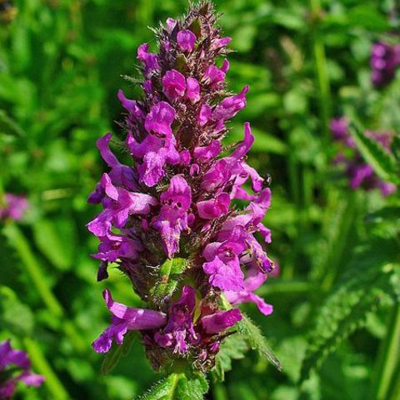
- Commonly found in open woodland.
- Purple perennial, blooms June-Aug.
A native perennial common in England and Wales, usually on light soils, in open woods, grassland and hedgerows. Attractive to Bees and butterflies alike. Spikes of red-purple flowers are produced on long slender stems growing from a rosette of crinkled leaves.
- Height: 30 - 60cm
- Flowers: June - August
- Soil Requirement: Well-drained
- Light Requirement: Full sun or partial shade
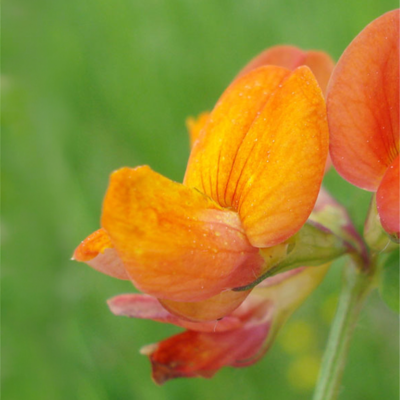
- An excellent nectar source.
- Golden perennial, blooms May-Oct.
A common creeping native wildflower perennial of dry grassland and roadside, with bright yellow wildflowers, often streaked with red. The cluster of long seed pods looks like a bird's foot. An excellent nectar wildflower plant and a caterpillar food plant for the Common Blue, Dingy Skipper and Clouded yellow butterflies.
- Height: 15 - 25cm
- Flowers: May - October
- Soil Requirement: Well-drained
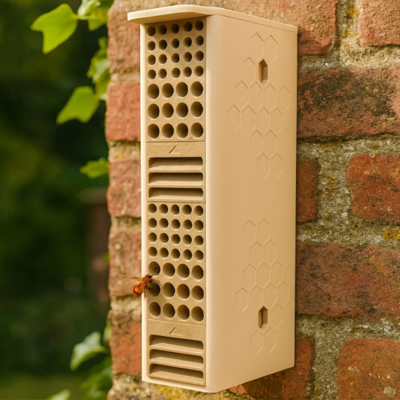
- Designed in Partnership with Buglife
- Eco-Friendly & Biodegradable
Support pollinators and wildlife with BugBlocks, a modular bug hotel designed in partnership with Buglife. This innovative bug hotel is made from eco-friendly, biodegradable materials with a blend of cornstarch PLA and recycled wood fibres. This not only reduces environmental impact but also ensures durability and weather resistance while retaining a natural, wood-like finish.
Each block is tail...
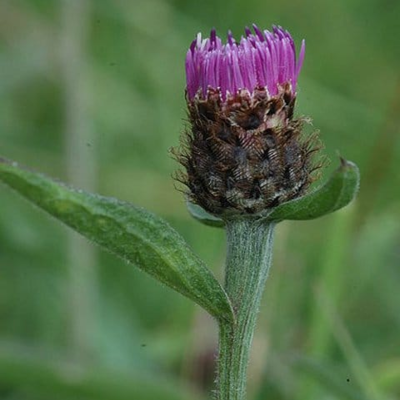
- Ideal component for sunny meadows.
- Purple perennial, blooms June-Sept.
Common knapweed or hardheads is a colourful meadow wildflower plant of the thistle family. Tight purple flowers, with lance-shaped leaves. Forms dense clumps over time, ideal for sunny meadows and hedgebanks. A great bee plant, and a goldfinch magnet in the autumn.
- Height: 30 - 60cm
- Flowers: June - September
- Soil Requirement: Well-drained
- Light Requirement: Full sun and partial shade
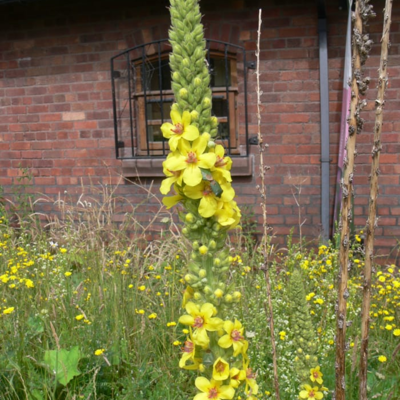
- Can grow to over a meter tall.
- Yellow biennial, blooms June-Sept.
Biennial wildflower plant with yellow flowers and purple centre, that likes dry soils and gravelly places favours more calcareous soils. Dark mullein can grow over a metre tall and is a perennial. A rosette of leaves throws up a spike of rich yellow flowers with orange anthers, growing in the herbaceous border.
- Height: 15 - 45cm
- Requires: Sun and well-drained soil
- Flowers: June - September
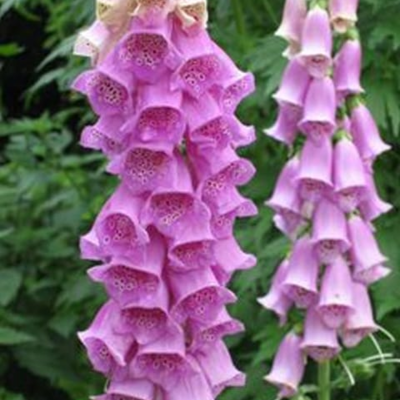
- Popular pollinator for bees.
- Pink perennial, blooms June-Sept.
A native biennial is occasionally perennial, common in woodland leering, hedgerows and heaths. The Foxglove wildflower plant has tall spikes of pinkish-purple bell-shaped wildflowers. The wildflowers are pollinated by bumblebees.
- Height: 50 -150cm (20-60in)
- Requires: Partial shade or sun on moist well-drained soil
- Flowers: June - September
Our ready-to-plant wildflower plug plants offer ...
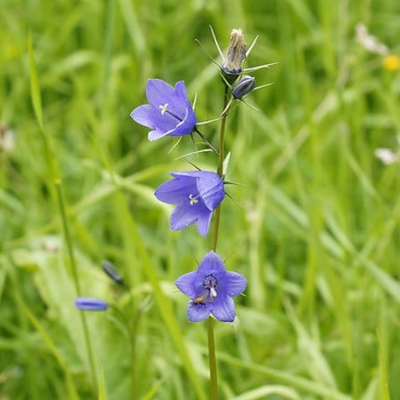
- Resilient bell-shaped flowers.
- Pale blue perennial, blooms July-Sept.
Also known as the Scottish bluebell wildflower plant, found throughout Britain except in the South West. A perennial wildflower plant is often found in dry grassy areas or on poor soils. Delicate pale blue nodding bell-shaped wildflowers are held on slender stems from July to September.
- Height: 15-25cm (6-10in)
- Requires: Full sun on well-drained soil
- Flowers: July - September
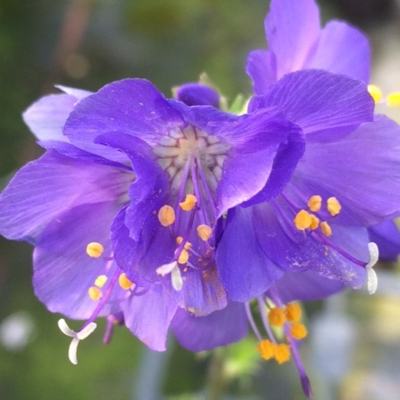
- Tall stems and ladder-like leaves.
- Blue perennial, blooms June-July.
Jacob's Ladder is an upright plant and gets its name from its ladder-like leaves, it has a bell, funnel-shaped flower that is lavender-blue in colour and forms at the top of its tall, slinky stem.
- Height: 50 -100cm
- Requires: Sand, Clay, Loam soils
- Flowers: Summer
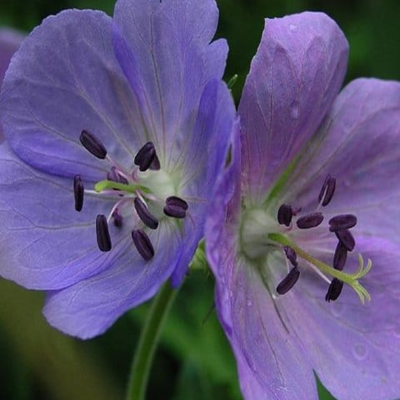
- Attractive to bumblebees.
- Blue perennial, blooms June-Sept.
A locally common native perennial found on roadsides and in meadows. The large blue flowers are attractive to Bumblebees, Honey Bees and Solitary Wasps. It is particularly hardy and will compete with grasses. During the winter these plugs die back and are classed as dormant, they do not have any leaves on them.
- Height: 60 - 100cm
- Flowers: June - September
- Soil Requirement: Well-drained
- Light...
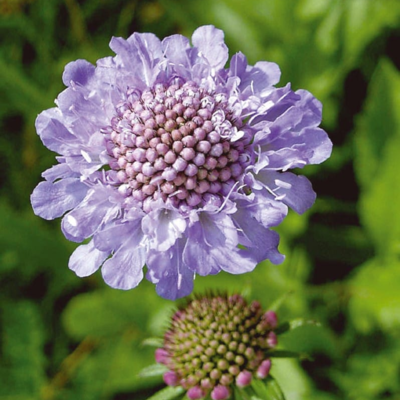
- Commonly found in chalky meadows.
- Lilac perennial, blooms July-Aug.
In summer butterflies and bees flock to the small mauve button-like flowers of this perennial. It can be found on very poor, dry, chalky soils throughout Britain. It has finely divided leaves, which are said to resemble the foot of a bird.
- Height: 15 – 70cm
- Requires: Dry, free-draining poor soils
- Flowers: July - August
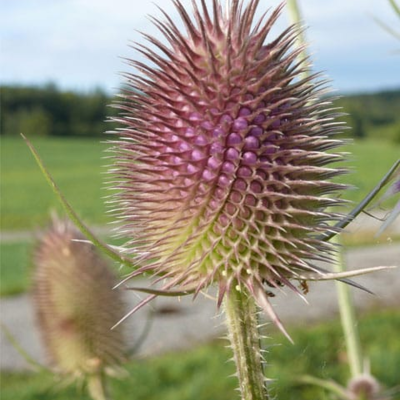
- Great source of food for wild birds.
- Purple biennial, blooms July-Aug.
A native biennial is found on rough grassland, roadsides and wastelands. In the first season, it produces a rosette of sharp spikey leaves. In the second year, it puts up a tall stem crowned with a spiny flower head with a band of mauve flowers. It is particularly attractive to insects and seed-eating birds such as Goldfinches and Siskins.
- Height: 80 - 200cm
- Requires: Full sun or partial sha...
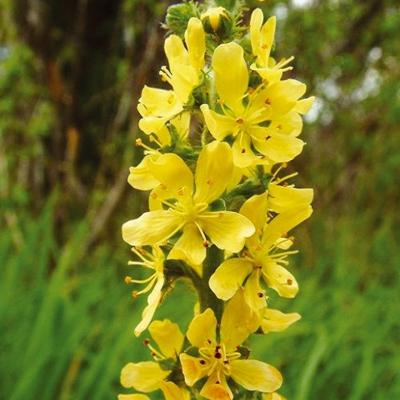
- Attractive to pollinating species.
- Yellow perennial, blooms June-Sept.
The Common agrimony plug plant is known as church steeples, good for a sunny border. It has slender tapering spikes of yellow, star-shaped flowers and finely cut leaves. As well as luring pollinators, wild birds struggle to resist!
- Height: 40 - 80cm
- Flowers: June - September
- Soil Requirement: Well-drained, neutral
- Light Requirement: Full sun
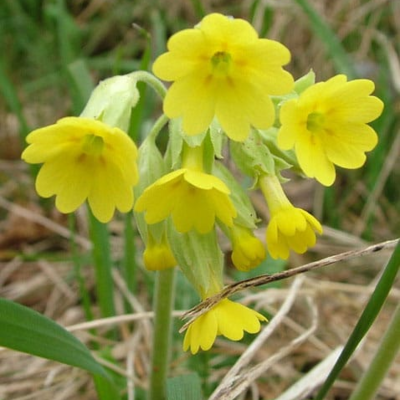
- Source of nectar for pollinators.
- Yellow perennial, blooms April-May.
A beautiful native perennial wildflower plant growing in grassland and meadows. The deep yellow flowers are grouped on upright stalks growing from rosettes of crinkled leaves. Cowslip wildflower plants are a good nectar source for butterflies and bees. Cowslips are the food plants of the caterpillars of the Duke of Burgundy Fritillary.
- Height: 10 - 30cm
- Requires: Dry grassland & scrubland
- Flo...
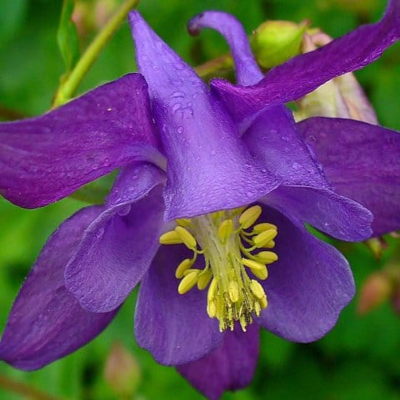
- Prefers damp soils.
- Violet perennial, blooms June-July.
This distinctive perennial is often found at woodland edges and roadsides, long-stalked with long-spurred blue-violet flowers. Aquilegia plug plants attract bees and butterflies.
- Height: 60cm
- Requires: Damp woods, dry and damp grasslands
- Flowers: June - July
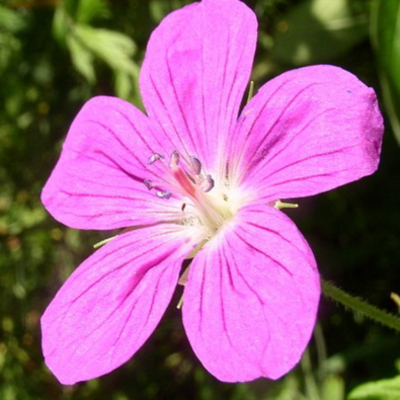
- Attractive flowers and evergreen leaves.
- Purple perennial, blooms May-Oct.
A showy and versatile perennial wildflower with attractive mauve, pink flowers and evergreen leaves. This plant is a great addition to any wildflower meadow as flowers from May right through the summer to provide colour.
- Height: 22 - 45cm
- Requires: Sun or part shade, well-drained soils
- Flowers: May - October
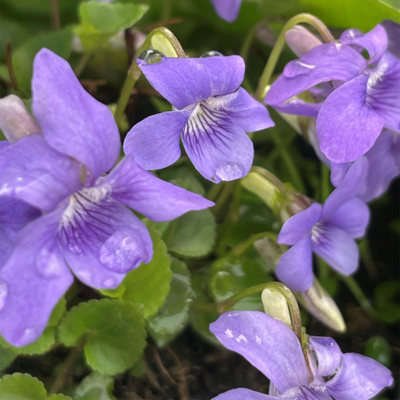
- Suitable for a variety of soil types.
- Violet perennial, blooms April-June.
A cheerful bold perennial thrives across a wide range of soil types with rich blue flowers, which will appear from April through to June.
- Height: 5 -10cm
- Requires: Shade tolerant
- Flowers: April - June

Grape hyacinth bulbs have spikes of blackish-blue flowers. They prefer open, well-drained soils and are perfect for naturalising over time and have a sweet, musky scent.
- Flowers: March-April
- Height: 15-20cm
- Bulb size: 5-6cm
- Non UK native
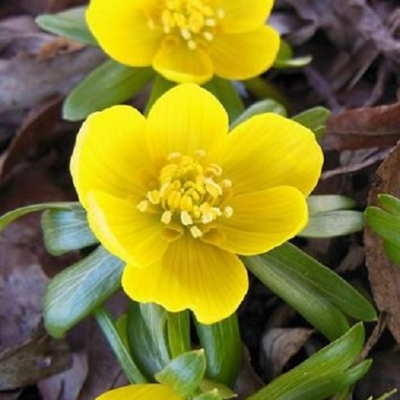
Eranthis hyemalis produce bright yellow flowers in the depths of winter followed by attractive green foliage. It is one of the earliest flowering garden flowers.
- Flowers: January-February
- Height: 10cm
- Bulb Size: 4/5cm
- Non UK native
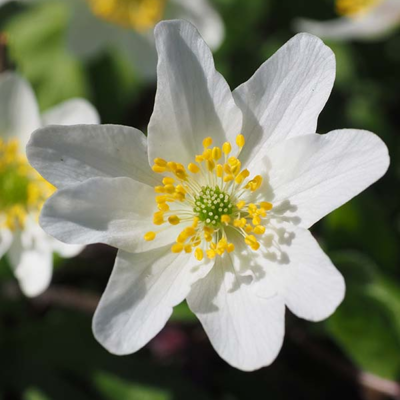
Anemone nemorosa just overlap with the flowering period of Bluebells and look stunning when planted together. Their star-like white flowers can be seen carpeting woodland floors before the trees burst into leaf.
- Flowers: April-May
- Height: 15-20cm
- Bulb size: Rhizomes
- UK native
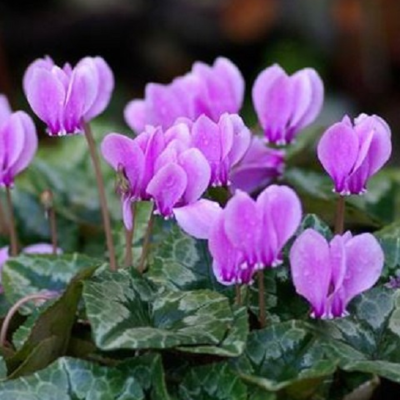
Hederifolium is pink with red eyes and silver spot leaves. Blooming towards the later parts of the winter, these are perfect for adding long-lasting colour to borders and pots.
- Flowers: November-January
- Height: 15cm
- Bulb Size: 15-20cm
- Non UK native
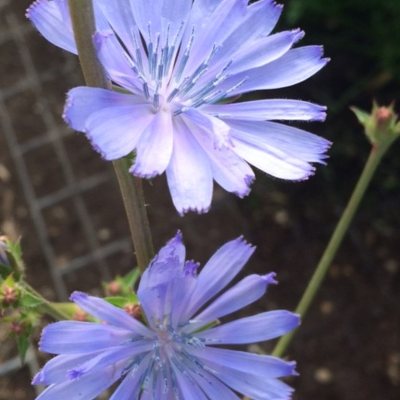
- Bold, beautiful star-like flower.
- Blue perennial, blooms June-Sept.
Also known as Blue Daisy, Blue Dandelion, Blue Sailors, Blue Weed, Bunk, Coffee Weed, Hendibeh, Horseweed, Ragged sailors, Succory, Wild Bachelors buttons and Wild Endive. Many varieties of this star-like clear blue-flowered plant are cultivated for a broad spectrum of uses such as salad leaves, chicons or roots which once baked and ground can be used as a food additive and a substitute for coffee...
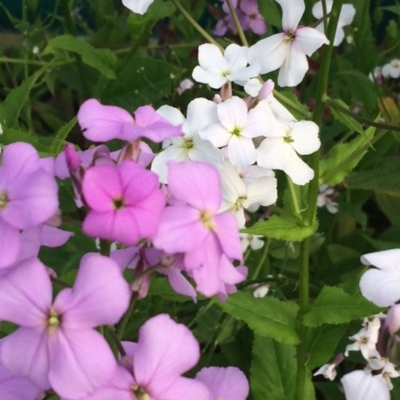
- An aromatic presence in the evening.
- Purple perennial, blooms May-Aug.
These purple or white flowers are great at attracting butterflies and look good in borders, you'll notice they become more fragrant towards the evening. Dames violet plants are perennial plants that don't mind being in the shade.
- Height: 60 - 90cm
- Requires: Sun or light shade
- Flowers: May-August
Our ready-to-plant wildflower plug plants offer a quick, reliable way to establish wildflower...
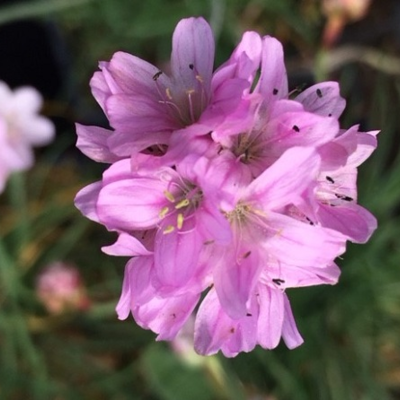
- Multi-headed, rockery species.
- Pink perennial, blooms May-Sept.
A favourite nectar source for butterflies, Thrift is a rockery plant forming cushions of fine grass-like leaves that will have vibrant, multi-headed pink flowers on tall stems.
- Height: 5 - 22cm
- Requires: Sun, well-drained soils
- Flowers: May - September
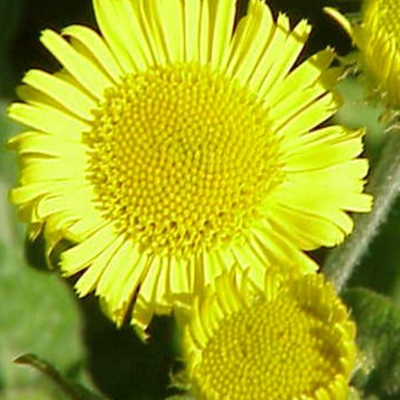
- Common in wetland areas.
- Yellow perennial, blooms Aug-Sept.
Fleabane is a native perennial wildflower plant common in marshes, ditches and wet meadows. Rare in Scotland. It is an upright woolly wildflower plant with clusters of gold flowers during August and September.
- Height: 25 - 60cm (10in - 2ft)
- Requires: Moist soils, sun
- Flowers: August - September
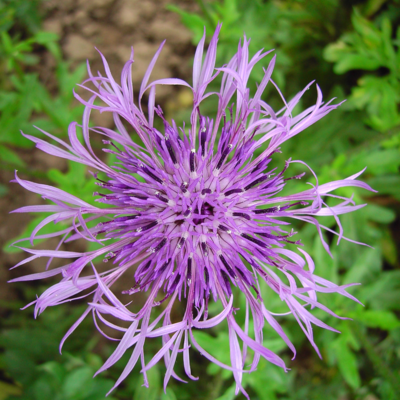
- Most common on chalky soil.
- Purple perennial, blooms July-Sept.
A native perennial wildflower plant, common on dry grassland, roadsides and hedgerows, especially on chalky soils. Reddish purple thistle-like flowers on long stalks are produced from July to September.
- Height: 30 - 90cm (8-36in)
- Requires: Full sun on well-drained soil
- Flowers: July - September
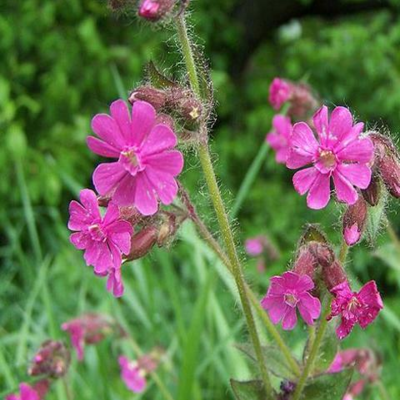
- A true classic, vivid in colour.
- Pink perennial, blooms May-June.
A classic hedgerow and woodland edge perennial found across the whole of Britain. The flowers are usually a deep pink colour but can also be white or pale pink. The Latin name ‘Silene’ is after the merry, drunken god of woodlands.
- Height: 30 – 90cm
- Requires: Semi shade or full sun on rich soils
- Flowers: May - June
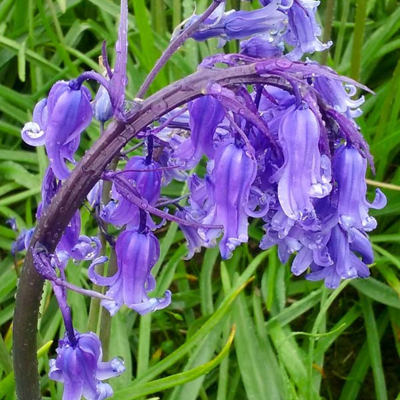
Easily grown from bulbs, Bluebells are ideal to add into woodlands and gardens to create swathes of blue in the Spring. Our stocks are pure British bluebells, carefully selected and lifted under license.
- Flowers: April-June
- Height: 30-40 cms
- Bulb size: 5+cm
- UK native
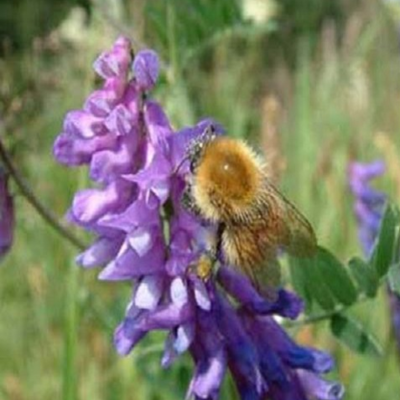
If you are trying to encourage bees the Bee wildflower plant collection is the one your looking for. This plug plant collection contains a minimum of 10 species available from our range and provide an excellent food source for bees.
- A minimum of 10 species will be chosen from the species list and used in equal quantities.
- Excellent food source.
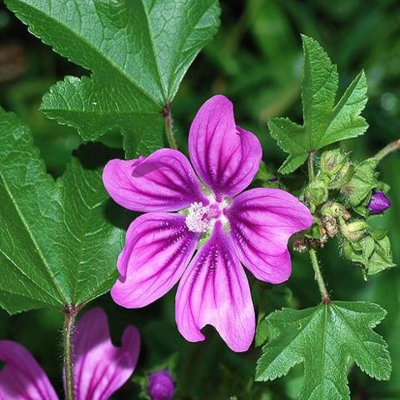
- Flourishes in direct sunlight.
- Pink perennial, blooms June-Sept.
Common mallow is a very ornate, tough plant with an abundance of pink/purple flowers. To get the best from this pretty plant place in full sun and in well-draining soils.
- Height: 30 - 90cm
- Flowers: June - September
- Soil Requirement: Well-drained
- Light Requirement: Full sun
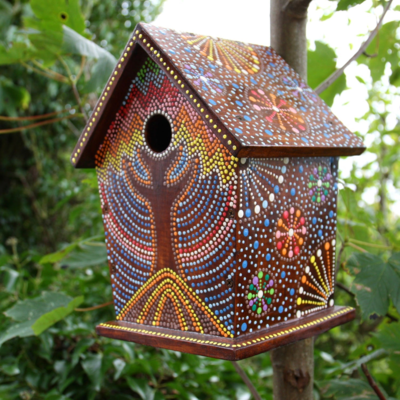
- Carefully Hand-Painted
- Made from Sustainably Sourced Timber
This cosy nest box is the perfect little hideaway for small birds, offering a safe and snug place to roost, rest, and nest from autumn right through to spring! Just in time for raising their hatchlings! Each box is lovingly handcrafted and hand-painted using traditional techniques, and made from sustainably sourced timber, so it’s as kind to the planet as it is to its feathered guests.
- Carefu...
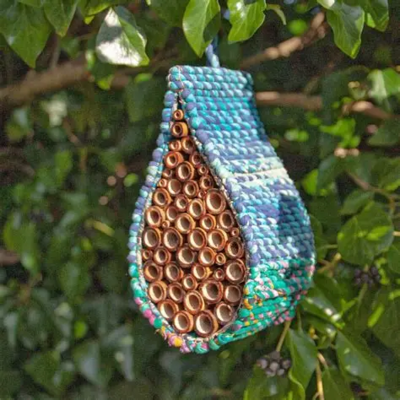
- Handcrafted in Bangladesh
- Crafted from Recycled Saris
These Bee Nesters are handmade in Bangladesh from recycled saris, turning vibrant textiles into beautiful homes for bees while helping support families out of poverty. No two are ever the same, making each Artisan Bee Nester completely unique and full of character.
- Handcrafted in Bangladesh
- Crafted from Recycled Saris
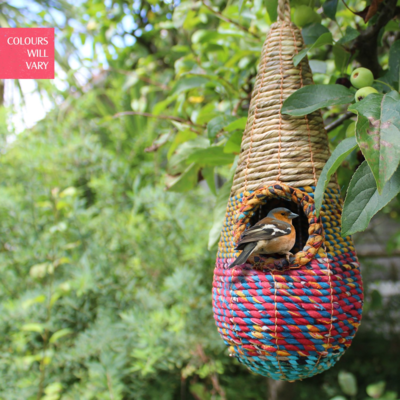
- Made from Recycled Saris & Natural Seagrass
- Handcrafted in Bangladesh
The Tahera Artisan Bird Nester is a circular wild bird nester. This shape offers a smaller cavity for the smaller species of garden birds offering a cosy place to roost in during the harsh winter. In the springtime, this doubles up as a suitable nest for smaller birds.
The sturdy inner frame provides good support, attached to strong metal hooks that make this easy to attach in your garden among...
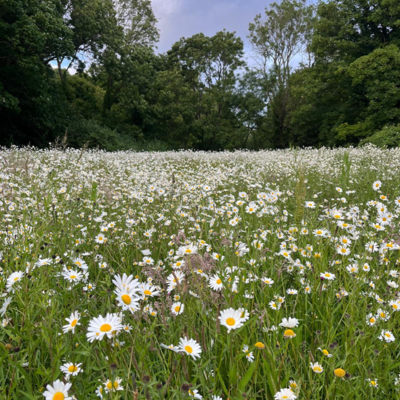

10% of the sales of this wildflower seed mix is donated to Buglife, the UK’s leading wildlife conservation charity for pollinators and insects.
- Provides vital pollen and nectar
- Creates habitat for invertebrates
Created in partnership with our wildlife conservation partners at Buglife, our pollinator friendly wildflower seed mix is designed to keep the planet’s tiniest heroes thriving! The perfect wildflower seed mix for bees, butterflies, beetles and other bugs. Sow these seeds and watch your garden burst into a nectar-packed haven that feeds and shelters our precious pollinators.
- Contains 14 perenn...
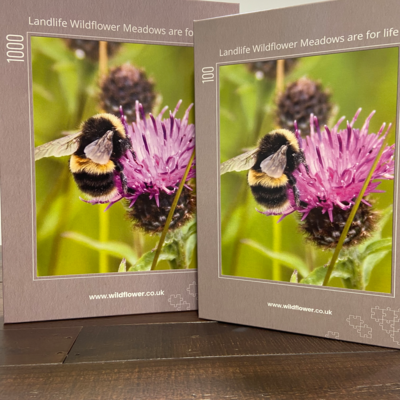
- Perfect Stocking Filler
- Available as 100 or 1000 piece jigsaws
Bring your wildflower meadow inside with our brightly coloured bee jigsaw puzzle which showcases a Bumble Bee on a bold, bright Common Knapweed flower. With its vivid green background, this Jigsaw isn't for the faint-hearted!
- Made from thick, durable board
- Completed Size (100 Piece*): 48 x 36cm
- Completed Size (1,000 Piece): 64 x 48cm
- Each puzzle is carefully enclosed in a rustic gift box...
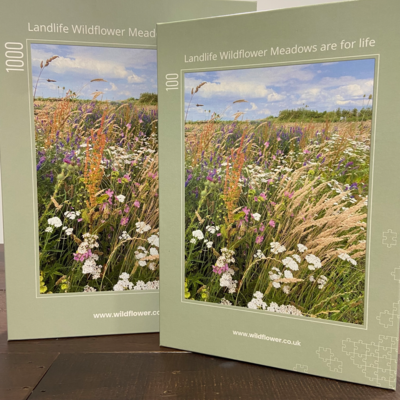
Turn your favourite meadow into a fun pastime with our Native Flora Jigsaw Puzzle! This bright and bold design captures our wildflower meadow at its best with various species differing in colour, height and stature. Suited to a wide age range, our Jigsaw Puzzles are the perfect gift for any wildflower enthusiast!
- Made from thick, durable board
- Completed Size (100 Piece*): 48 x 36cm
- Complete...
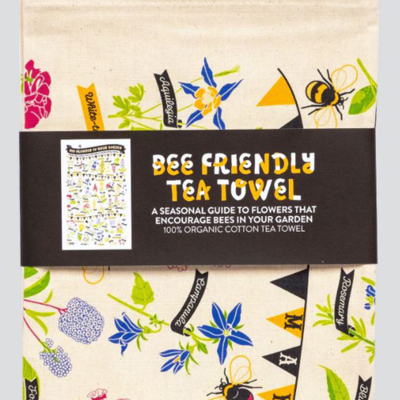
Created using unbleached and organic cotton, this unique tea towel features a guide to seasonal wildflowers perfect for bees and other pollinators - a delightful addition to any kitchen!
Designed and produced in collaboration with Friends of the Earth to increase awareness of the vital contribution bees make to our food supply, economy and quality of life.
- Organic and unbleached
- Size - 48cm...
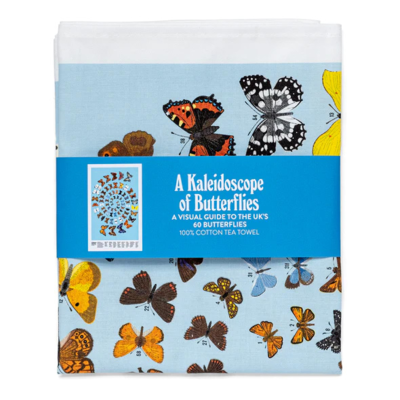
A brand new edition to our range showcasing 60 wonderful native and migrant Butterflies that are in need of our support to help stop the decline in numbers that we are sadly seeing with how the environment is changing.
This tea towel has been designed and produced in collaboration with Friends of the Earth and provides a good guide for all the species you may see in your own garden.
- 100...
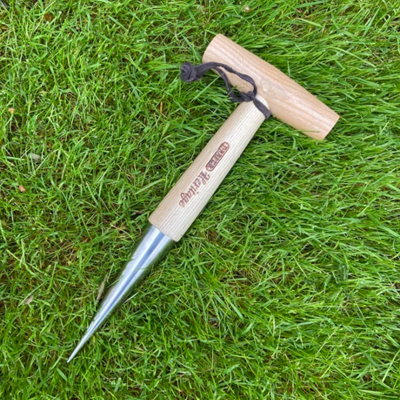
The ultimate tool for planting quickly and easily your plants and bulbs. A quality solid ash handle securely fitted to a hardened carbon steel head, the traditional design is ideal to assist in planting your plants and bulbs into beds, borders and grassland.
- Made of high quality hardened carbon steel
- Weatherproofed ash wood handle
- Hammer finish, powder coated head for improved rust resistance
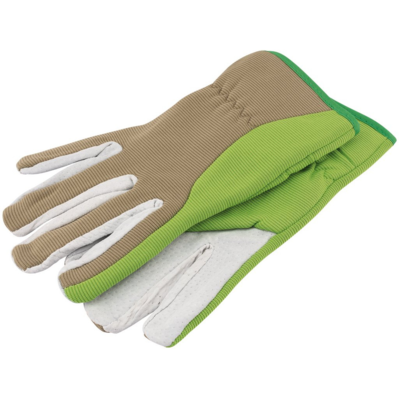
- Medium duty
- Available in 2 sizes
Built for brambles, borders, and everything in between. Tough on the outside, comfy on the inside; perfect for getting stuck in without roughing up your hands! These sturdy gloves are your new garden sidekick, made from tough leather for reliable use, season on season!
- Fantastic all-round protection for gardening tasks
- Breathable elasticated back and open cuffs ensure hands remain comfortable
Buy With Confidence
Landlife Wildflowers grow and supply high-quality, native wildflower products, restoring wildflowers right across the UK. Working in conjunction with wildlife charity, Buglife, we’re bringing back Britain’s treasured wildflowers! Find out more about why we’ve been trusted by the general public, Natural England and The National Trust for over twenty years.
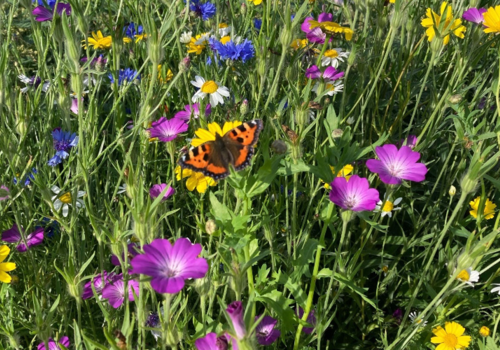
We’re proud to supply only the highest-quality, native wildflower products - tried, tested and refined by us for two decades to ensure each and every customer is delighted with their purchase. Find out more about our commitment to the supply of native, provenance-assured wildflower products to restore Britain’s natural wildflower habitats for bees, butterflies, birds and wildlife.
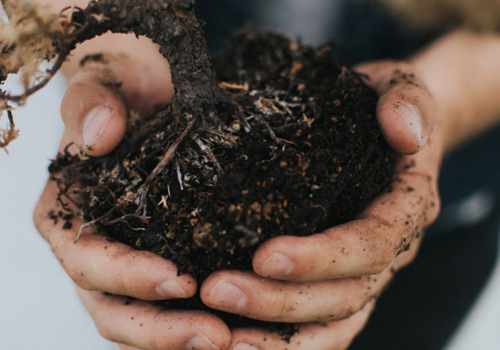
If you have any questions or would like to get in touch, our team of wildflower experts are on hand to guide you every step of the way. We love talking about wildflowers and the quality of our products, and are pleased to help with any enquiry, including how to establish wildflowers, product recommendations and even creating custom mixtures for specific projects.